
Editing Hint: Add intro text. Remove the fun fact module below if not needed.
Nature has bestowed upon Esperance a wide range of natural wonders which are sure to make your holiday experience unforgetable. Listed below are some of our most popular natural attractions.
Fun Fact
Lorem ipsum dolor sit amet, consectetur adipiscing elit. Suspendisse non neque ut est maximus aliquet eget vitae justo. Sed ultrices lacus et metus consectetur, a mollis turpis sodales.
Itinerary
Great Ocean Drive
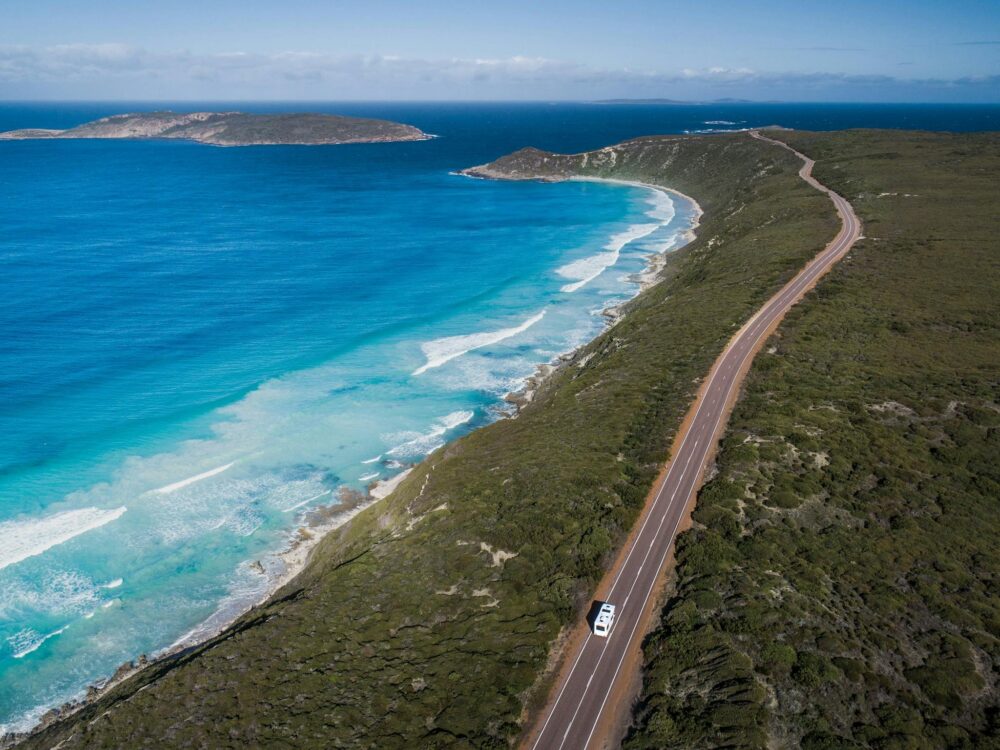
This 40km self-drive takes you past stunning beaches, rocky headlands, steep cliffs and hidden ocean pools.
It includes a visit to the Rotary lookout giving you a 360 degree view over the town and Recherche Archipelago. Stop for a swim at Twilight Cove, visit Australia’s very first wind farm or choose to walk/cycle from The Esplanade in town, out to Twilight Cove beach (approximately 10kms one way).
This tourist loop meanders past Pink Lake (which is not pink anymore, but you can read about the lake's history on an information sign erected at the Pink Lake lookout), where the lookout will provide you with an amazing location to watch the sun go down.
Explore
National Parks
(60km east of town)
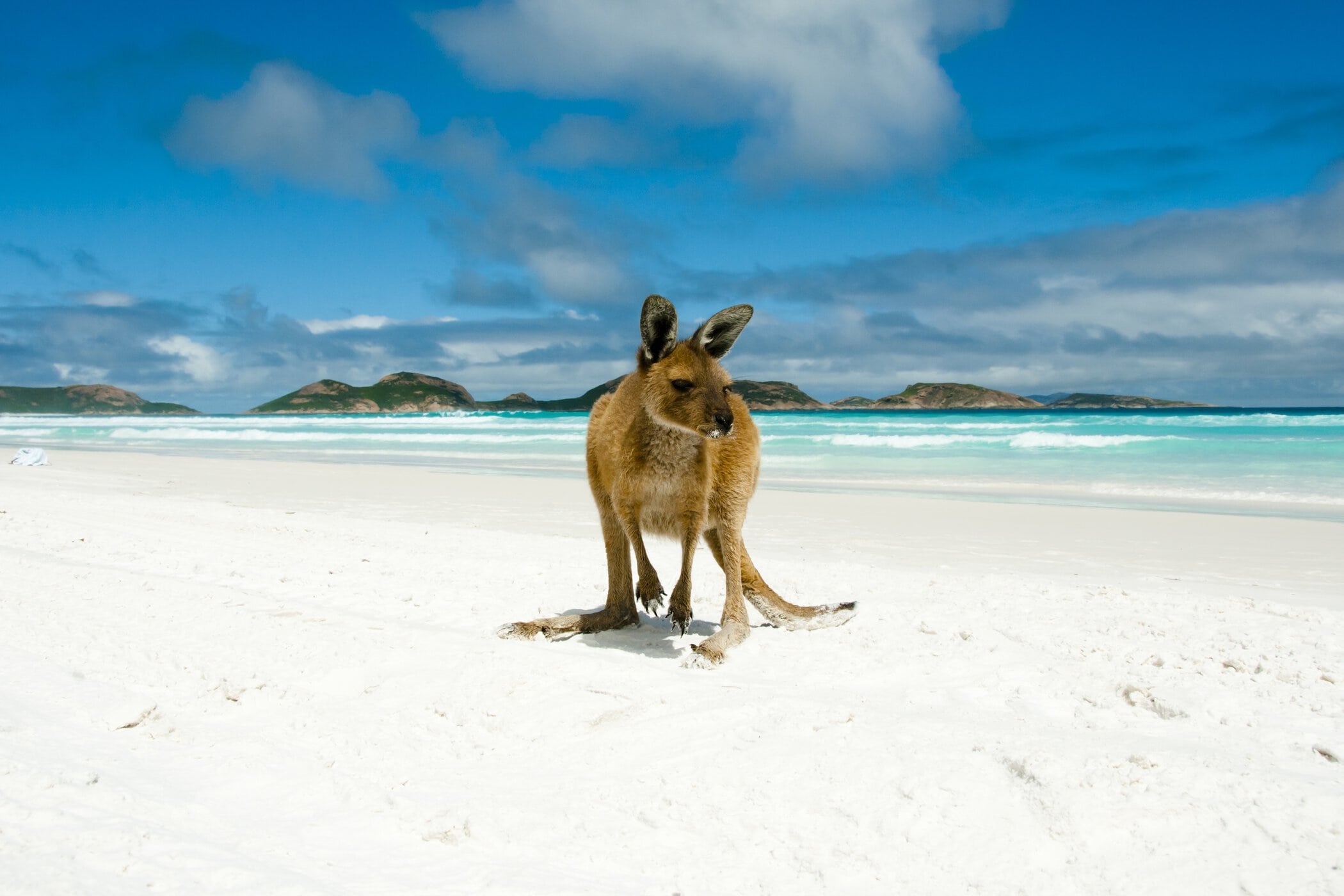
Cape Le Grand(opens in new tab) is one of Western Australia's best known and most spectacular National Parks. Pristine and perfect are two words that reflect the absolute beauty of this park. Here you will find an ocean coloured all imaginable shades of blue and sand so white and fine it squeaks between your toes.
Please note as of the 5th of June 2026 and until further notice, there is no beach access to/from Le Grand Beach due to the severe beach erosion. You can still access the national park following the sealed road.
(120km east of town)
Cape Arid(opens in new tab) extends from the ocean, all the way inland to Mount Ragged. The biodiversity of this National Park is best enjoyed by going for a drive along the long stretches of beach, or a walk on one of the many walk trails available.
(85km west of town)
With both coastal and inlet scenery, Stokes(opens in new tab) is a great place to take the family for a day trip or spend a few nights camping out under the stars and paperbarks. With linkages to the beach you can choose to fish for bream in Stokes Inlet or head out for some beach fishing.
There are tracks leading off in several directions and the Moir Homestead(opens in new tab) ruins are definitely worth a look.
(200km west of town)
Fitzgerald River(opens in new tab) is one of the largest (329,882 hectares, or 815,160 acres) and botanically significant National Parks in Australia, with over 60 unique plant species and a further 48 rarely found elsewhere in the world.
The park includes the Barren Mountains(opens in new tab), Eyre Range and the Fitzgerald River(opens in new tab) as well as incorporating the Fitzgerald Biosphere(opens in new tab). During winter months, southern right whales shelter close to shore with their newborn calves.
Keep in mind that the central area of the park is only accessible with a four-wheel drive vehicle or on foot.
(100km north of town)
This ancient granite peak, and its companion, Peak Eleanora, give sweeping views over the dry sandplain heaths and salt lake systems of the surrounding countryside. Towering 500 metres above the surrounding plain, Peak Charles(opens in new tab) is visible for more than 50 kilometres in all directions.
The park lies within the Great Western Woodlands(opens in new tab), an internationally significant area of great biological richness. The granite peaks have weathered to orange and brown hues. There are many unusual rock formations, and numerous species of orchids grow on the slopes. About 40 million years ago, both peaks were islands, and wave-cut platforms can be seen on their upper slopes.
Nature Reserves
Woody Island(opens in new tab) is an A-class Nature Reserve off the coast of Esperance, surrounded by pristine bushland and ocean, great for bushwalking, swimming, snorkeling, fishing or just relaxing. There is a regular ferry service to the island via Woody Island Eco Tours(opens in new tab).
The lake located on Middle Island which is approximately 130km by sea to the east of Esperance. Lake Hillier is an A-class Nature Reserve with extremely high environmental protection protocols. It is situated in a very remote location which is difficult to access. There are a couple of scenic flights and boat charter services which frequent Lake Hillier. Contact the Esperance Visitor Centre staff for more information.
(15kms north of town)
HELMS ARBORETUM(opens in new tab) IS CLOSED UNTIL FURTHER NOTICE FOR YOUR SAFETY, DUE TO RECENT BUSHFIRES.
Acres of a diverse range of botanical plant species can be seen here. Wildflowers are abundant when in season, and there are designated picnic areas and walk trails.
(7kms north of town)
Encompassing seven major, and more than ninety smaller lakes, the Lake Warden, Woody Lake and Mullet Lake Reserves are one of only a few wetlands in Western Australia recognised under the Ramsar Convention(opens in new tab).
Supporting a habitat of around 20,000 waterbirds, it's also home to bandicoots, possums and frogs. There is a great walk trail (called Kepwari, which roughly translates to 'place of moving water') around Wheatfield, Windabout and Woody Lakes. Read more about it on our Trails & Walkways page.
(14kms north west of town)
An ideal place for a picnic, bush walk and birdwatching. Out at Lake Monjinup you’ll find a wooden boardwalk which meanders through the paperbarks, as well as an Environmental Centre providing information about the various plants and animals which live there. With toilets and picnic tables, Lake Monjinup Reserve(opens in new tab) makes for a fun day out for everyone.
(71kms north of town)
Esperance's very own "Wave Rock". Also known by its Nyungar name, Marbeleerup, Mt Ridley is a large granite outcrop which rises 300 meters above sea level. You can climb the summit for a fantastic vantage point overlooking the surrounding bushland. At the base of the rock there are some shaded picnic areas, making it a great day trip option. A four wheeled drive vehicle is often required during winter months, or whenever there has been lots of rain.
When visiting a National Park it is important to remember:
- Entry and camping fees apply. Camping fees vary depending on where you are staying, and remember that for camping at Lucky Bay and Le Grand Beach you need to book online before heading out. Ask the staff at the Esperance Visitor Centre(opens in new tab) for more information.
- Check road conditions before heading out by visiting the website https://alerts.dbca.wa.gov.au/(opens in new tab) or contacting the Department of Biodiversity, Conservation and Attractions (DBCA), Esperance office on: (08) 9083 2100.
- If you plan on camping at one of these National Parks, click here for some helpful information.
- Most of these National Parks and Nature Reserves offer a variety of bushwalking opportunities. Find out more about Trails & Walkways around Esperance.
Editing Hint: Delete row if not relevant. If you want to add FAQS:
- First, add the FAQs via the FAQ section in the website backend.
- Where it makes sense, create a new FAQ category based on the topic; e.g. "Town Name" or "Fishing".
- After adding all relevant FAQs in the backend, update the FAQ accordion settings below. (You may need to save and refresh the page before they show up inside the Visual Builder.)
- In the filter settings, either manually select all the FAQs you want to show OR select the assigned FAQ category to filter the list.
Frequently Asked Questions
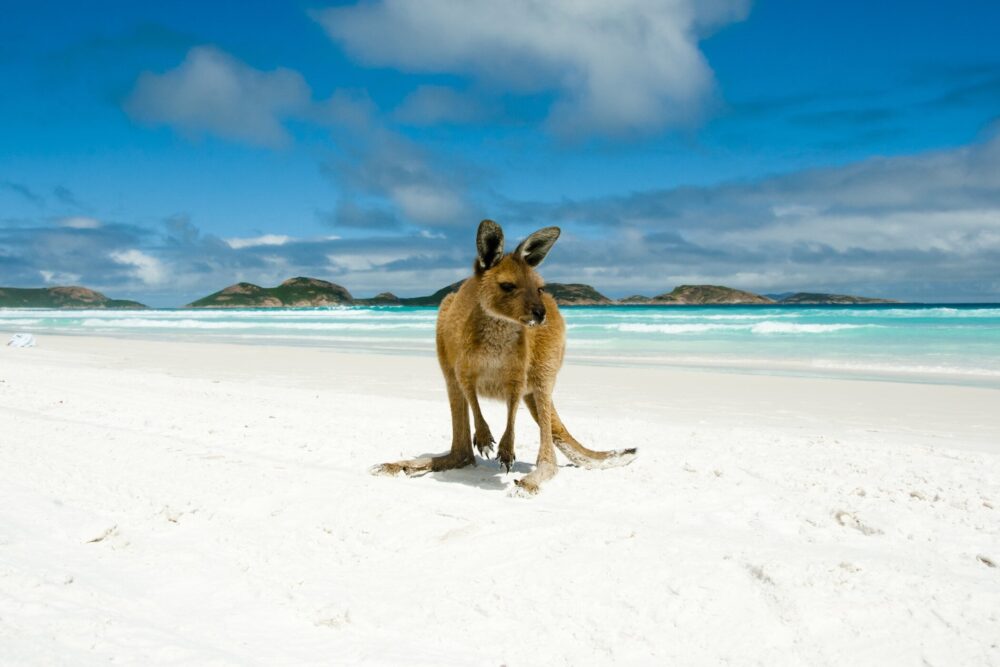
They are always in the park, but not always on the beach. The Lucky Bay kangaroos are Western Greys (Macropus fuliginosus), and like most kangaroos, they usually rest in the middle of the day and are active in the early morning and evening. These tend to be the best times of day to see them on the beach. Western grey kangaroos are primarily grazers, nibbling on native and introduced grasses. In forest and woodland habitats, they rely on browse from native shrubs.
Yes. It is a popular beach for swimming. Winds and weather can dictate which section of the 3km beach is best for a dip. Early morning on a calm day is usually pleasant, especially when a later northerly is in the offing. Not only are early morning swims less likely to be wind affected, but the beach is usually quieter at that time of the day. Note currents and rips and be aware of any risks to safety before taking the plunge.
Yes, it is in the Cape Le Grand National Park, east of Esperance. Cape le Grand is one of several national parks in the Esperance region. Large granite outcrops, white beaches, blue seas, wildflower dotted heathlands and dense thickets of showy banksia provide habitat for animals such as pygmy possums, kangaroos, and white bellied sea eagles. It is an ideal place for those who want to connect with nature, and enjoy swimming, surfing, fishing and boating in picturesque bays.
Yes, it is within the Cape Le Grand National Park so you will need to obtain a Park Pass, and if you want to camp, you will need to book a site as well. Entry fees for Cape le Grand National Park can be paid at the entry station on arrival at the park. Park passes can also be obtained online, and campsites can also be booked online, but be aware that in summer, they are hot property, in high demand and require booking well in advance.
Lucky Bay is about 63.6 km east of Esperance, allow for a drive of about 50 minutes. After heading east on Merivale Road, you will turn south on Cape le Grand Road, into the Cape le Grand National Park, and on to Lucky Bay.
It is a pleasant drive on a sealed road with views of rolling farmland. Lucky Bay is about 3.6km from the park entrance, via Lucky Bay Road, and the way is well signposted.
No. Dogs are not allowed in the Cape le Grand National Park. Dogs are excluded from visiting such places because they can injure or stress native animals. Even the smell of a dog can trigger fear in animals that view them as predators. But there is another reason for keeping your dogs out of such places. Sometimes, park managers use poison baits to control feral animals like foxes and cats, predators that are devastating native wildlife populations. These baits will kill domestic dogs. Nobody wants that! There are kennels in Esperance that can look after your furry friends while you explore (see links below).
Keep exploring
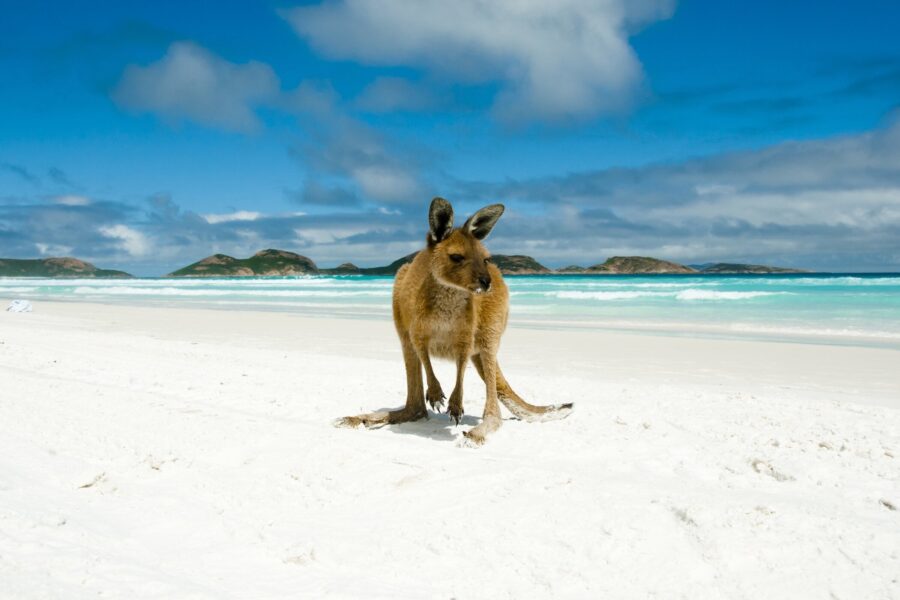
Australia’s beaches are famous the world over, and Esperance has earned its place among the best of them.
The Esperance Stonehenge is the only full size replica of the original Stonehenge in the UK.
Esperance Kepa Kurl is surrounded on all sides by national parks, nature reserves and off-the-beaten-track country.
Why Esperance’s Pink Lake isn’t pink anymore, when you might catch a hint of colour, and how to explore the Ramsar-listed Lake Warden wetlands.
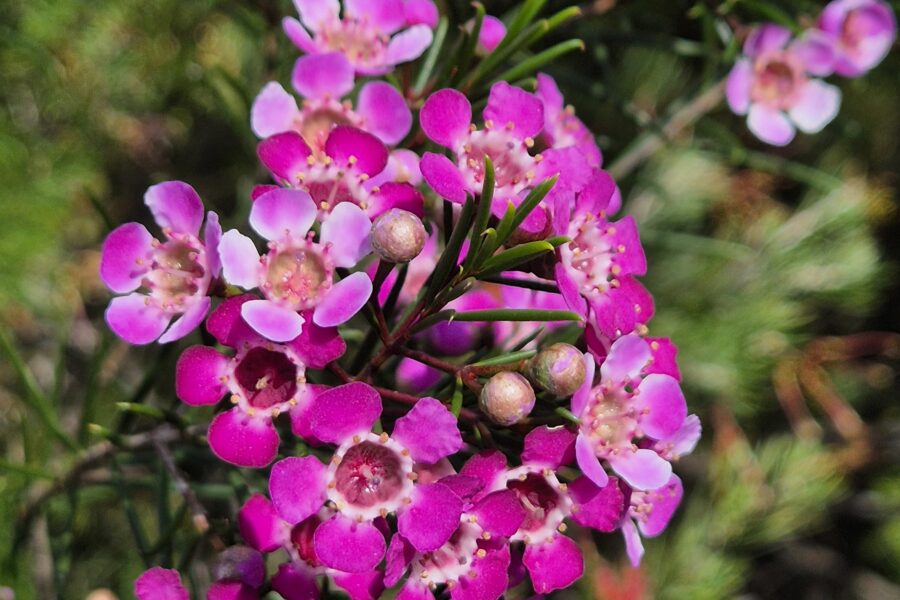
Esperance sits in one of the world’s richest wildflower regions. Here’s when the season peaks, what blooms where, and how to plan your visit.